
Date and Time:
Location:
Address:
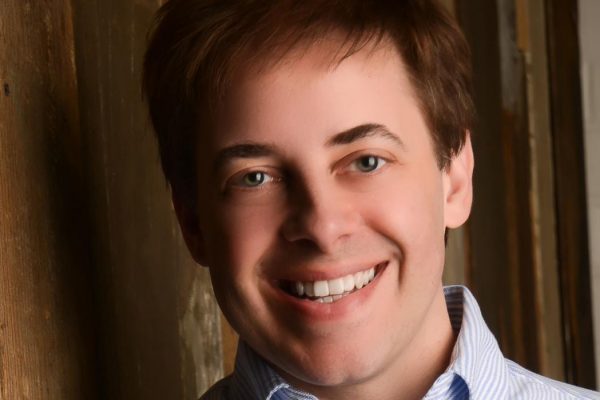
Mitch Prinstein, Ph.D., ABPP
Chief Science Officer of the American Psychological Association and the John Van Seters Distinguished Professor of Psychology and Neuroscience, University of North Carolina at Chapel Hill
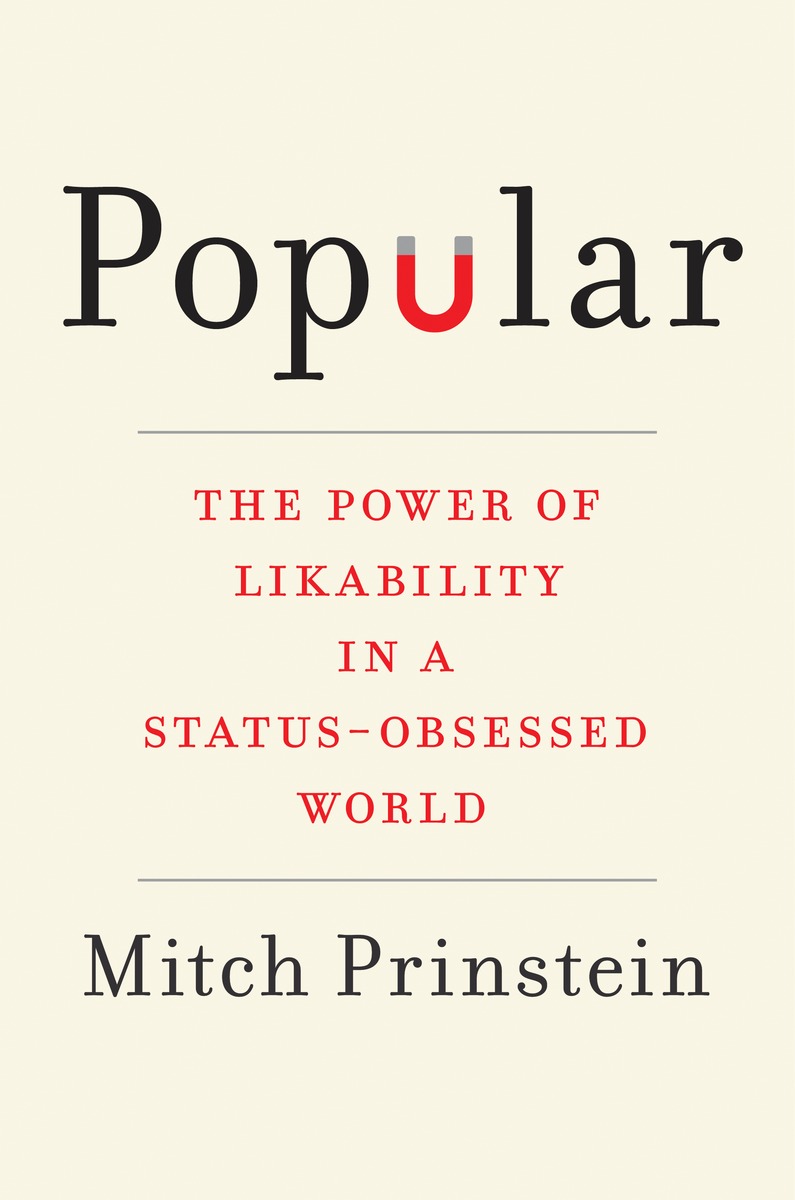
Popular: The Power of Likability in a Status-Obsessed World
In his new book, Popular: The Power of Likability in a Status-Obsessed World, Mitch Prinstein, Ph.D., the John Van Seters Distinguished Professor of Psychology and Neuroscience, and the Director of Clinical Psychology at the University of North Carolina at Chapel Hill examines why popularity plays such a key role in our social development, our eventual happiness, success, and even our longevity.
There are two distinct types of popularity: one that helps us, likability – arising from our ability to make others feel close, trusted, happier after time spent with us; and one that can potentially harm us, status – a measure of how well-known, widely emulated, and powerful we are. In preschool, studies show that we value likability most. This is good, since likability plays a role in every aspect of our lives for decades to come. But as teenagers when, neurologically, we develop faster than at any other time after the age of one, status becomes a new form of popularity that we are biologically programmed to seek, whether it helps us, or as Prof. Prinstein argues, it doesn’t.
The biological basis for popularity comes from a part of the brain that matures quickly in adolescence, called the ventral striatum. This is a region responsible for making us feel good, and beginning in adolescence, it begins to receive greater signals from two brain substances: the hormone oxytocin, which increases our desire to connect and bond with our peers, and dopamine, the same neurotransmitter that produces the pleasure response triggered by many recreational drugs. Emerging research now shows that this neurochemical cocktail not only makes us feel good when we have high status, but also makes us pursue it, sometimes in ways we don’t even realize. This is one reason why our brains continue to draw upon our initial, formative high school experiences with popularity for the rest of our lives, creating biases at home and at work.
Prof. Prinstein’s Peer Relations Lab has been conducting research on popularity and peer relations for almost 20 years, resulting in over 100 scientific works, including a slew of scientific journal articles, book chapters, a set of encyclopedias on adolescent development, and even a textbook on the field of clinical psychology.
Upcoming Events
Vibe: The Secrets of Strong Connections in a Lonely World
Adam Grant, Ph.D.
Saul P. Steinberg Professor of Management and Professor of Psychology, The Wharton School, University of Pennsylvania
Greta Johnsen
Interviewer, podcast host, event moderator, and book person
Francis W. Parker School, Heller Auditorium
Note: Event start time is Central Time (CT).
NO REGISTRATION REQUIRED.

Human Raised: Nurturing Connection, Curiosity, and Lifelong Learning in the Age of AI
Dana Suskind, M.D.
Pediatric cochlear implant surgeon and founder and co-director of the TMW Center for Early Learning + Public Health at the University of Chicago
Emily Oster, Ph.D.
Esposito Family Goldman Sachs University Professor of Economics at Brown University and Founder and CEO of ParentData
ON ZOOM